
Money matters: experts weigh in on big financial questions
Four questions about personal finances

At Everence, we work every day to live out our core values, including that of creating a lasting impact. We invest in the future when we welcome a new class of interns each summer. This year we worked with 16 interns across three of our locations: Goshen, Indiana; Harrisonburg, Virginia; and Lancaster, Pennsylvania. The interns were assigned to different departments, including Human Resources, Marketing, IT and Credit Union support.
Many of our interns are college students or in their early 20s – a time in which they are likely establishing their finances and setting new financial goals. Given their fresh perspective and outlook, we wanted to know what kinds of questions they have about personal finances. We asked four of them to provide a question for an Everence Financial Consultant to answer. Here are their questions.
Q: Would you recommend younger investors to invest in a Traditional or Roth IRA? - Evan Bert, Sales Support Intern, Harrisonburg
A: It depends, but for many younger investors, I often lean toward a Roth IRA.
The main difference between a Traditional IRA and a Roth IRA is when you pay taxes. With a Traditional IRA, you may receive a tax deduction today, but you’ll generally pay taxes when you withdraw the money in retirement. With a Roth IRA, you pay taxes now, but qualified withdrawals in retirement are tax-free.
Since many young adults are early in their careers and may be in a lower tax bracket than they will be later in life, paying taxes now through a Roth IRA can make a lot of sense. They also have decades for their investments to grow.
Pedro Lopez, Financial Consultant, Lancaster
Consider also workplace retirement plans. If you’re already contributing to a traditional pre-tax 401(k) and your employer doesn’t offer a Roth option, a Roth IRA can provide valuable tax diversification.
Ultimately, many investors benefit from having both pre-tax and after-tax retirement savings, creating greater flexibility in retirement.
Q: How can I start investing with a small amount of money? - Rahenny Reyes, Credit Union Support Intern, Lancaster
A: It’s great that you’re thinking about investing now, even if you don’t have a lot of money to start with. In fact, taking the first step early is often more important than the amount you invest. Starting small allows you to build good financial habits and take advantage of the power of long-term growth over time.
One of the easiest ways to begin is by opening an investment account with an investment company that has low or no minimum balance requirements. Many platforms allow you to start investing with as little as $10 or $20. Rather than trying to pick individual stocks, consider low-cost index funds or ETFs, which provide diversification by spreading your money across many companies.
Amanda Rock, CFP®, Financial Planner, Lancaster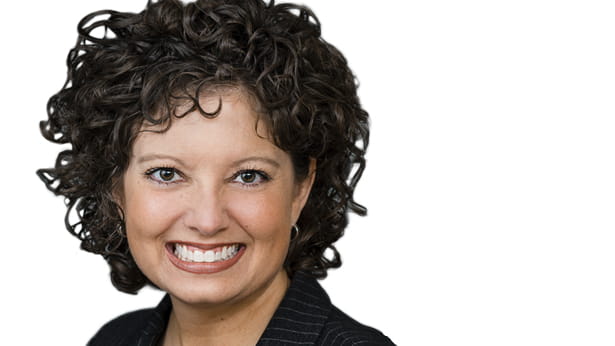
Once you’re ready, aim to invest a small amount consistently, even if it’s only $25 or $50 per month. Regular contributions can add up significantly over time thanks to compound growth.
Most importantly, focus on getting started and staying consistent. Investing is a long-term journey, and building the habit early can make a meaningful difference in your financial future.
Q: What should I do now if I want to purchase a house in the future? - Tyler Scott, Retirement Services Intern, Goshen
A: If buying a home is something you hope to do in the future, the best time to prepare is now, even if it’s still a few years away.
Start by creating a realistic budget so you know how much you can consistently save each month. Building a down-payment fund can make a significant difference.
Also, pay attention to your credit. Making payments on time, keeping credit card balances low, and avoiding unnecessary debt can help you qualify for better mortgage rates when the time comes. At the same time, build an emergency fund to cover any unexpected expenses that may arise.
Federica Pandolfi, Financial Consultant, Harrisonburg
Everence Federal Credit Union offers financial counseling to those saving for a home through our team of Certified Credit Union Financial Counselor (CCUFC)™ professionals. Planning today can make the homebuying process much smoother and a lot less stressful when you’re ready.
Q: What are the Biblical principles that I can practice to help me better steward my finances? - Hanna Slobozien, Credit Union Marketing Intern, Lancaster
A: Biblical stewardship begins with an affirmation of and a commitment to live according to Psalm 24:1 – “The earth is the Lord’s and all that is in it, the world, and those who live in it.” As Christ’s
Ryan Eakins, Financial Planner, Goshen
- We recognize that God has created us to work. As a Christian, the goal in work is to glorify God. “... Work as if your soul depends on it, as for the Lord and not for humans.” (Colossians 3:23)
- Ask if you are content. Paul teaches us in Philippians 4 that he learned to live humbly, and he learned how to live with plenty and with many needs. He learned to be content regardless of circumstances.
- The New Testament teaches us to give. In 1 Corinthians 16, we are told to put something aside on the first day of the week in accordance with our means. In 2 Corinthians 9, we are taught to give joyfully as a cheerful giver. In Matthew 6, we are encouraged to give privately. And, in 2 Corinthians 8, we are directed to give toward the needy and fellow believers in the church.
- Managing faithfully includes saving for the future, which will allow us to be more generous. We are not saving or investing to hoard for ourselves, and we are warned about greed in 1 Timothy 6. The love of money is dangerous. We save and steward and trust in God’s provision.
- We can leave an inheritance for our children – not just earthly, but spiritually. As Christians, we are coheirs with Christ – if we share in his sufferings we may also share in his glory (Romans 8:17).