
Our common bond
How a fraternal benefit society serves you
When Edward Peters, an Irish Catholic actuary, stopped by the Mennonite Mutual Aid office in the summer of 1963, no one could have anticipated the impact he’d have on the organization.
Edward, who was on his way home to Indianapolis from a fishing trip in Canada, had grown up around Mennonites. He had heard of MMA and wanted to see the organization for himself, unable to believe that Mennonites would sell life insurance.
Before Edward’s visit, MMA had been struggling to find ways to become a legal entity. In addition to a few other legal hiccups, the state of Indiana barred MMA from holding status as a mutual insurance company while also providing mutual aid to its policyholders through its Catastrophe Aid Fund. Similar to today’s Sharing Fund, the Catastrophe Aid Fund provided grants to families and individuals in need following crises, like house fires, medical emergencies and more. The state considered these mutual aid grants to be discriminatory, as it provided some members with more benefits than others.
For Harold Swartzendruber, then President of MMA, this posed a significant concern. MMA was built upon mutual aid, after all, and eliminating programs like the Catastrophe Aid Fund would be stripping it of a core part of its identity.
During his visit, Edward introduced Harold to the idea of a fraternal benefit society – a legal framework that would allow MMA to continue its work of providing insurance to its members while also allowing the organization’s mutual aid programs to continue. A key aspect of fraternal benefit societies was – and is – that they offer insurance and financial products to members who share a “common bond” – a religion, job or ethnicity – something MMA had already been doing for years.
As a fraternal benefit society, MMA wouldn’t pay taxes, Edward explained, and instead, could direct what they would’ve paid in taxes into programs that would benefit members – such as its Catastrophe Aid Fund. In fact, as a fraternal benefit society, MMA would be encouraged to give funds back to their members – not penalized for it.
According to Harold’s autobiography, this talk with Edward about fraternal benefit societies “planted a seed that was in fallow ground for a time but later grew up to be an attainable goal.” It took significant planning and help from Edward, but less than a year later, the outline for a fraternal benefit society called Mennonite Mutual Aid Association was presented and accepted by the MMA board. Soon thereafter, the Indiana Department of Insurance approved MMA, now Everence, as a fraternal benefit society.
Of his chance encounter with Edward, Harold wrote: “Certainly, one of the amazing, miraculous experiences, as I look back on these years, was how God, in His time, led this devout Catholic to stop in on his way back from a fishing trip to ultimately help answer the prayers of many people as to how to find solutions for MMA problems at a particular time in its developing programs.”
EVERENCE ASSOCIATION, A FRATERNAL BENEFIT SOCIETY
Sixty years after we became a fraternal benefit society, we’re looking to reinvigorate our member benefits and to create opportunities where people can do good – together.
Though our values as a fraternal benefit society are rooted in the Anabaptist tradition, our common bond goes beyond theological identity. Today, we offer membership to anyone who believes in the Anabaptist interpretation of Christian stewardship – that all that we are and all that we have belong to God.
In a world that is often so divided, Christian stewardship can be a uniting belief, said Brian Kubicki, Everence General Counsel and Chief Compliance Officer. “Everence seeks to bring people together through this common bond.”
That’s a key part of our fraternal program’s reinvigoration – helping foster communities across the country, all built around core beliefs of stewardship and mutual aid.
Historically, our member benefits have been individual, said Andrea Bontrager Unzicker, Everence Vice President of Strategic Initiatives. Everence is working to expand that, she said, and promote ways for fraternal members to come together to do good.
We’re keeping the member benefits we’ve had for years – our accidental death benefit, college scholarships, hearing care discounts, will preparation grants and more. But we have more benefits in the works, with hopes that they might further meet the financial, social and spiritual needs of our members and excite them about being part of a group with shared beliefs.
“Our values can really resonate today – and not just with the Mennonites and Anabaptists,” Brian added. “There’s a lot that can be shared with the world in good, positive ways.”
In addition to building up communities, fraternal benefit societies are known for their charitable work – something Everence is no stranger to.
“As a fraternal benefit society, there is no profit to be gained,” Brian said. “If you have extra money, it is going to our members or going to charitable purposes.”
For decades, a portion of the money that we save as a tax-exempt organization has gone into our Sharing Fund, a matching grant program that seeks to partner with churches to help individuals and families in need.
Over the last 20 years, Everence has given away more than $20 million through these matching grants, helping pay for utilities, rent, hospital stays and vital church ministries. Our partner congregations have more than matched our grants – contributing over $30 million to their members and communities over the years, bringing our collective total to more than $50 million.
Like the Catastrophe Aid Grant was so important to Harold Swartzendruber in the 1960s, the Sharing Fund is important to the Everence mission and identity today.
“The money we give away is fundamental to who we are and what we do,” Brian said.
As it’s done for decades, the Sharing Fund will continue providing individuals and families with basic needs. Now, Everence is preparing to launch another grant program – one that will maximize impact and bring communities closer.
MUSTARD SEED GRANTS
Everence is piloting a new member benefit called the Mustard Seed Grant, which will provide up to $500 for a fraternal member to organize a charitable fundraiser or community event.
Like the biblical parable of the mustard seed, the goal is for a small investment to grow into something larger, multiplying generosity, volunteers and community impact. Grants can be used to plan and execute events where the proceeds benefit a nonprofit or charitable cause – events like an auction or a benefit concert. Or grants can be used for hands-on service projects that bring people together for a shared community good, such as a community garden workday or a neighborhood tree planting.
Mustard Seed Grants will allow “people to come together to support one another,” Andrea said. The new grants offer opportunities for communities to openly rally around one another and exponentially increase their impact.
So far, Mustard Seed Grants are being piloted with Everence employees as we finalize the program and prepare it for a public launch in 2027. Since the first grants were awarded in the early spring of 2026, Everence employees have jumped at the chance to bring their communities together.
Audrey Miller, a Financial Consultant in Goshen, Indiana, used her Mustard Seed Grant to host a meal prep day over the summer. A group of 10 volunteers prepared 30 meals that went to 10 local foster families, as part of Nappanee Missionary Church’s ministry work. Audrey and her husband, who attend Nappanee Missionary Church, have been significantly involved in the church’s foster and adoptive family support group over the past six years.
“Meals are a simple way that we can create margins for families,” Audrey said. “The families were overwhelmed with appreciation when they learned about the grant and how this was used to support them.”
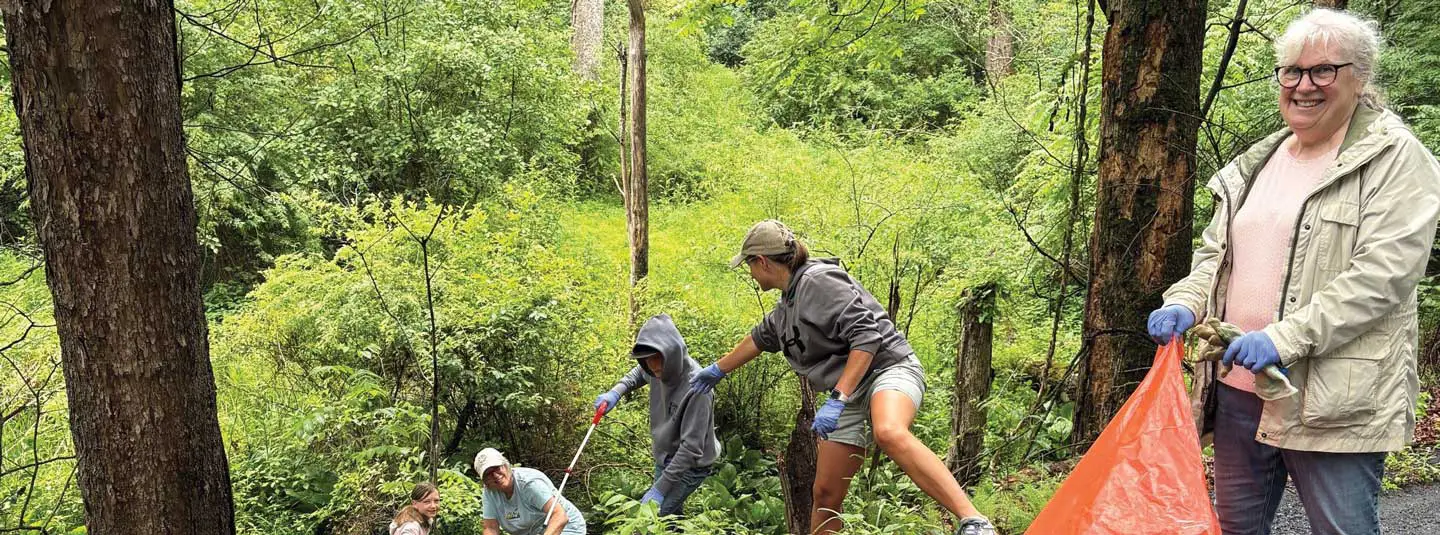
In Harrisonburg, Virginia, Everence Office Manager Patty Skelton used her Mustard Seed Grant to plan a three-mile litter pick-up walk in her community. On an early Saturday morning in June, 11 people gathered and picked up more than nine bags of garbage. Since that summer morning, Patty and other residents have discussed organizing more litter pick-up days throughout the year to help maintain the rural roads in their community.
The event not only provided an opportunity for individuals to improve their community, but it also offered a chance to get to know one another and build new relationships, Patty said.
Audrey and Patty’s events were quite different, but both served their communities in needed ways. A key aspect of the Mustard Seed Grant is that it allows fraternal members the opportunity to identify a need in their community and provide a solution, alongside friends, family members and even strangers.
“That’s the beautiful thing about the Mustard Seed Grant,” Andrea said.