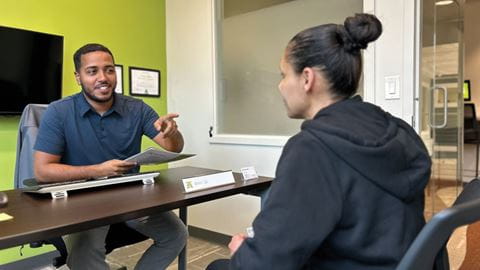
Erwin Zacarias, Community Development Manager, covers four things to think about as you consider buying a house and getting a mortgage!

Helpful calculators and articles

Estimate your mortgage payments
Use this calculator to estimate how much your monthly mortgage payments may be based on the cost of the house and the terms of your potential mortgage.
Everyday Stewardship
Financial wellness, tailored
By Sharon Hernandez
Everence seeks to meet more people where they are
Read articleCommon questions and answers
Am I financially ready to buy a house?
Before you start looking for a house, you should figure out if you're even ready to make such a big purchase. Consider these important factors:
- Debt
- Unless you have a huge sum of cash on hand, buying a house will require you to take out a mortgage. You'll want to make sure that you have a handle of your current debt. Try to pay down as much of it that you can before you decide to buy a house. If you have too much debt, financial institutions may not be willing to offer you a mortgage, or will give you a much higher mortgage rate.
- Savings
- You will need to build up your savings – which can take some time – to be ready for two things: your down payment, and the other expenses involved in buying a house. And that doesn't include your emergency fund. Buying a house takes a lot of money up front, in addition to the long-term costs.
How much money should I have as a down payment?
The down payment is a portion of the cost of the house that you'll pay up front to your financial institution. Financial institutions require this because it gets you personally invested in the house, and more likely to pay your mortgage payments. Even if your credit score is good enough that your mortgage lender only requires a small down payment such as 3.5%, most people recommend you plan on paying a 20% down payment to make your monthly payments lower.
What other expenses should I keep in mind?
- Closing costs – You'll have to pay for a house inspection, property taxes and interest as you buy your house. Typically add 2-5% of the total cost of the home onto the final price, according to CNBC.
- Repairs and maintenance – Save money designated for house repairs and maintenance. That way, when an appliance breaks or a pipe bursts, you'll be ready to pay for the repairs without having to borrow money.
- Upgrades and purchases – You may want some new furniture to fill out your house. Maybe you need to rent a truck or moving van to help you move your stuff.
- Insurance and yearly fees – Owning a home means that you'll be responsible to pay property taxes and homeowners insurance each year.
When should I buy and when should I rent?
If you know you are going to stick around somewhere for a while, have a stable job and have enough savings and income to buy a house, go for it! But if you're not sure you want to stay somewhere, or you just don't have the savings right now, stick to renting. If you move out of a house within a year of purchasing it, you won't recover the closing costs and taxes. Plus, depending on where you live, it can be cheaper to rent because you aren't responsible to pay for expensive repairs.
How Everence can help
An Everence professional can take a look at your finances through our financial planning process and give you a complete review of your situation. They can help you evaluate if you're ready to buy a house now, or should wait until later. And they will help you evaluate other areas of your finances to make sure that you're on the right track.
Everence also offers both fixed-rate and variable-rate mortgages through our credit union.
Ask your questions and learn more
Call 800-348-7468 or visit any of our offices to talk to an Everence representative.
Or call 800-451-5719 and talk to the Everence Federal Credit Union for more information about our mortgages.