
It takes a village
How organizations are raising the next generation of stewards

Jeremy Chen spends a lot of time working with teens, helping them grow into community leaders. He’s the Director of Klean Kensington, a community development nonprofit that pays teens to “clean and green” the Kensington neighborhood in Philadelphia.
Jeremy also spends a lot of time thinking about the formation of these teens, especially when it comes to finances and stewardship.
An empty lot in Philadelphia has been transformed into a safe place for kids to play with help from youth in the Klean Kensington program. | Photo by Jeff Shafer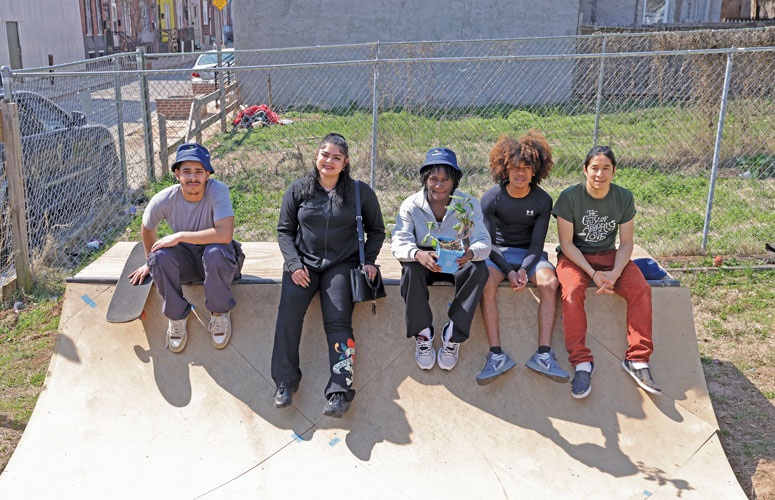
But for Jeremy, the paycheck is only part of the story.
“We’re called to be disciple-makers,” Jeremy said. “We’re all called to form people and ourselves around goodness and virtue – not just artificially, but in very real areas like money.”
Klean Kensington is just one of many organizations that Everence works with to support children and teens as they develop and grow. Many of these nonprofits and churches operate in different ways, offering different programs and services. Despite these differences, they share a common goal: that youth will learn to follow Jesus in every part of life – including their finances.
FOLLOWING JESUS
Klean Kensington doesn’t stop at paying teens; it also walks with them as they learn how to steward what they earn. The organization hosts financial education workshops, sometimes led by Everence Federal Credit Union staff, and helps teens learn about basic financial skills they will need as adults.
But Jeremy also sees a deeper invitation to practice solidarity and accountability, much like the early church. Teens are asked to consider how their approach to money might look different in community than it does in private.
Teens in the Klean Kensington program have helped turn an empty lot into gardens in Philadelphia. | Photo by Jeff Shafer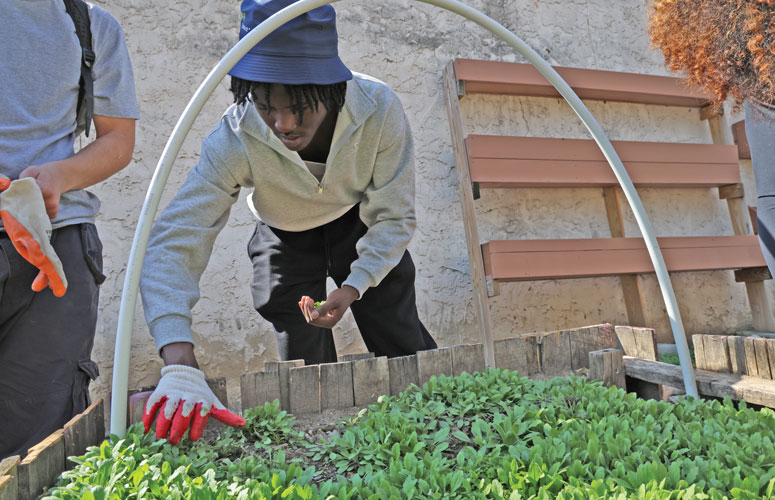
At Klean Kensington, questions like this are explored together – teens and adults, side by side. In that shared space, young people learn that following Jesus with their money is not just about private choices, but about how those choices affect their neighbors and community.
“In the body of Christ, we should be helping each other think about money and steward our money,” said Jeremy.
HONORING GOD IN EVERY WAY
Two hours down the road in Mount Joy, Pennsylvania, youth center Raise28 is doing its own work of creating disciples out of kids and teens.
As a faith-based organization, Raise28’s mission is to reach local youth with the life-changing gospel of Jesus Christ, said Executive Director Mark Unger. Through their afterschool programming, Raise28 works to influence kids to follow Jesus in everything they do.
This, of course, includes finances.
With discipleship formation in mind, Mark and his team frame their financial education through the 10–10–80 framework. The kids learn to first give 10% of their income (or allowance) to God through tithing. The next 10% goes into a savings account. The final 80% is theirs to spend.
It’s Raise28’s hope that by teaching this financial framework, kids will learn to honor God through stewardship and wise money management.
“Life is about trying to honor God with your words, with your thoughts, and with your actions,” Mark said. Helping kids apply that vision to their money is simply one more way of teaching them how to follow Jesus.
Raise28 and Everence Federal Credit Union are continuing to explore ways to collaborate, bringing practical, faithrooted financial education not just to kids, but to their parents as well, through shared events and ongoing relationships.
That same vision – and collaboration with EFCU – is taking shape in other communities, too. Over the summer, Regina Shultz, a church elder at Harrisonburg (Virginia) Mennonite Church, worked with Everence Federal Credit Union to open several youth savings accounts for young kids from immigrant and refugee families who attend the church’s Wednesday evening activities.
Regina had heard about EFCU’s Youth Savings Celebration and its promotion. During the annual three-day event, kids can get an extra $5 from EFCU when they make a deposit of $15 or more into a new or existing youth savings account.
She felt compelled to help the kids in her church community open their own accounts, as many of their parents are learning the complexities of the American financial system themselves. She hoped that by helping open these savings accounts it might help the kids learn to see work, saving and generosity as a part of following Jesus, rather than something separate from their faith.
Instead of simply giving each kid $15 for the Youth Savings Celebration promotion, Regina and a friend paid the kids to spread mulch and weed their yards. She wanted them to feel the satisfaction of earning their own money.
In total, seven accounts were opened, though Regina hopes this is just the beginning.
This coming summer, Regina would like to open more youth savings accounts for kids in her church community. She also has tentative plans to continue teaching basic financial principles to the kids to reinforce their saving habits and encourage hard work.
For Regina, opening these youth savings accounts was less about producing savvy consumers and more about forming stewards – young people who see money as a gift to be managed carefully for their future.
BEYOND THE BASICS
When Emily Miller and Giovanni Paulino-Santiago from Everence Federal Credit Union reflect on partners like Harrisonburg Mennonite Church, Raise28 and Klean Kensington, they see a pattern.
“These organizations are investing in the youth, ultimately, for the reason of making disciples,” Emily, Market Relationship Manager for the Mount Joy and Lititz (Landis Homes) branches, said. But between the faith formation and spiritual development, these organizations also make time to teach kids about stewardship.
Both Emily and Giovanni are Certified Credit Union Financial Counselors, so they understand the importance of teaching financial well-being basics – things like direct deposit, debit cards or how to open a checking account.
But Emily and Giovanni see essential financial skills as part of a bigger picture: helping young people become faithful stewards of what they have.
“Financial literacy helps believers manage what they’ve been entrusted with wisely,” Giovanni, Member Services Representative at the Philadelphia EFCU branch, said.
While their tools may be practical, the underlying purpose of Emily and Giovanni’s work – and the work of organizations like Klean Kensington, Raise28 and Harrisonburg Mennonite Church – goes far beyond the nuts and bolts of money management and invites youth to view money differently: as a way to love God and neighbor.